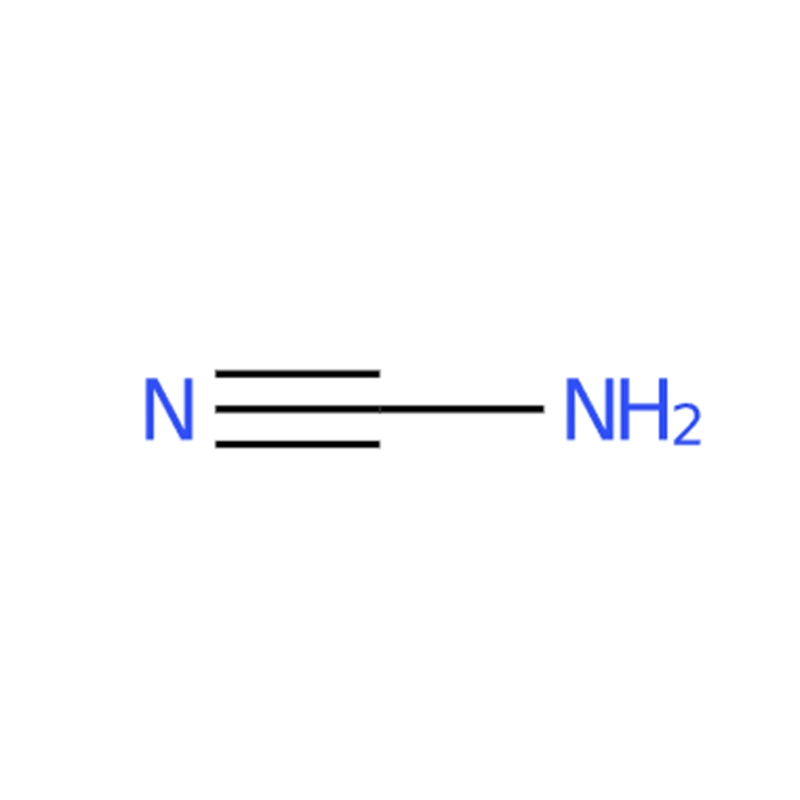
Product Description of Cyanamide CAS#420-04-2
Pure cyanamide is a white hygroscopic crystalline solid. Its melting point is 45-46 °C, and it decomposes at high temperature under atmospheric pressure, with a boiling point of 83 °C at 0.5 mmHg. It has good compatibility with polar solvents including alcohols, phenols, amines and ethers. It is highly soluble in water, with water solubility of approximately 77.5 g per 100 g water at 15 °C, while its solubility in benzene and halogenated hydrocarbons is limited. Concentrated cyanamide is chemically unstable and susceptible to polymerization.
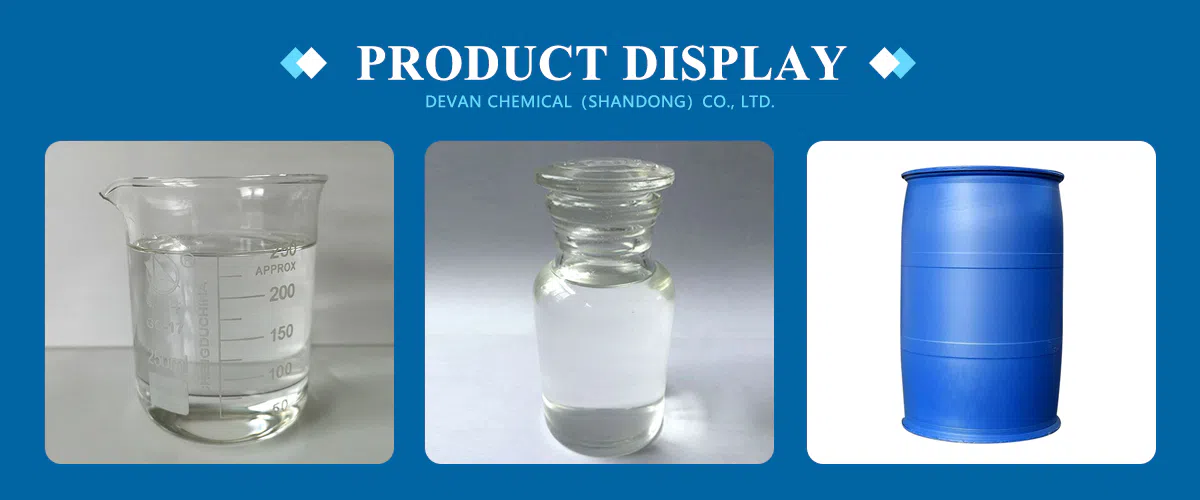
Stabilizers are usually added to extend shelf life. The most common commercial grade is 50% aqueous solution, which is a colourless transparent liquid. For 50% solution, refractive index n20D is 1.4050 and relative density is 1.082.
Cyanamide Chemical Properties
| Melting point | 45-46 °C (lit.) |
| Boiling point | 83 °C/0.5 mmHg (lit.) |
| density | 1,282 g/cm3 |
| vapor pressure | 1Pa at 24.95℃ |
| refractive index | 1.405 |
| Fp | >230 °F |
| storage temp. | 2-8°C |
| solubility | ethanol: soluble10%, clear to hazy, colorless to faintly yellow |
| pka | 1.1(at 29℃) |
| form | Crystalline solid |
| Specific Gravity | 1.282 |
| Water Solubility | 775 g/L |
| Sensitive | Hygroscopic |
| Merck | 142684 |
| BRN | 1732569 |
| Exposure limits | ACGIH: TWA 2 mg/m3 |
| NIOSH: TWA 2 mg/m3 | |
| Stability: | Unstable - heat sensitive. Incompatible with strong oxidizing agents, strong reducing agents, bases, acids, iron and its salts, steel, brass, lead, moisture. Reacts with acids to produce very toxic gas. |
| InChIKey | XZMCDFZZKTWFGF-UHFFFAOYSA-N |
| LogP | -0.72 at 20℃ |
| CAS DataBase Reference | 420-04-2(CAS DataBase Reference) |
| NIST Chemistry Reference | Cyanamide(420-04-2) |
| EPA Substance Registry System | Cyanamide (420-04-2) |
Safety Information
| Hazard Codes | T |
| Risk Statements | 21-25-36/38-43 |
| Safety Statements | 3-22-36/37-45-26 |
| RIDADR | UN 2811 6.1/PG 3 |
| OEB | B |
| OEL | TWA: 2 mg/m3 |
| WGK Germany | 2 |
| RTECS | GS5950000 |
| TSCA | Yes |
| HazardClass | 8 |
| PackingGroup | III |
| HS Code | 29269090 |
| Hazardous Substances Data | 420-04-2(Hazardous Substances Data) |
| Toxicity | LD50 i.p. in male mice: 200-300 mg/kg (Doull) |
Product Application of Cyanamide CAS#420-04-2
Essential raw material for pharmaceutical manufacturing:Cyanamide serves as a fundamental building block to make hydrochloride cytarabine, the dyestuff intermediate 3-amino-5-hydroxy-1,2,4-triazole, cyanuramide, methyl cyanoformamide, thiourea and other chemical substances. It participates in producing organic guanidine compounds, which are further processed into barbiturate derivatives, sulfa medicines and guanidine-type salts. This chemical assists the fabrication of the anti-cancer agent fluorouracil. Its calcium derivative has been studied for effects against alcohol intoxication and parasitic activity in laboratory research.
Feedstock for farm-oriented agrochemicals:It acts as a core precursor for manufacturing low-toxic, residue-free and wide-spectrum agrochemical agents. Multiple fungicides covering carbendazim, benomyl, pyrimidine-based insecticides, and herbicides like bensulfuron-methyl and hexazinone are synthesized with its help. Replacing lime-nitrogen raw material cuts manufacturing expenses and lessens environmental contamination. Worldwide, cyanamide liquid is widely used as plant dormancy breaker, pest repellent and synthetic intermediate, and it supplies moderate nitrogen fertilizer effects.
Plant-growth regulator within crop farming:Possessing bacteriostatic and insect-repelling effects, the compound modulates plant development. It restrains plant catalase and activates the pentose phosphate pathway to accelerate primary metabolite generation. For cherries and grapes, spraying it 15-20 days prior to bud-break synchronizes bud sprouting and moves forward budding time by 7-10 days. Blossoming, pigment accumulation and fruit ripening arrive ahead of schedule. Growers also apply it on kiwifruit and sweet-cherry crops to terminate bud dormancy, speed-up harvesting dates, lift yields and upgrade fruit quality as well as commodity traits.