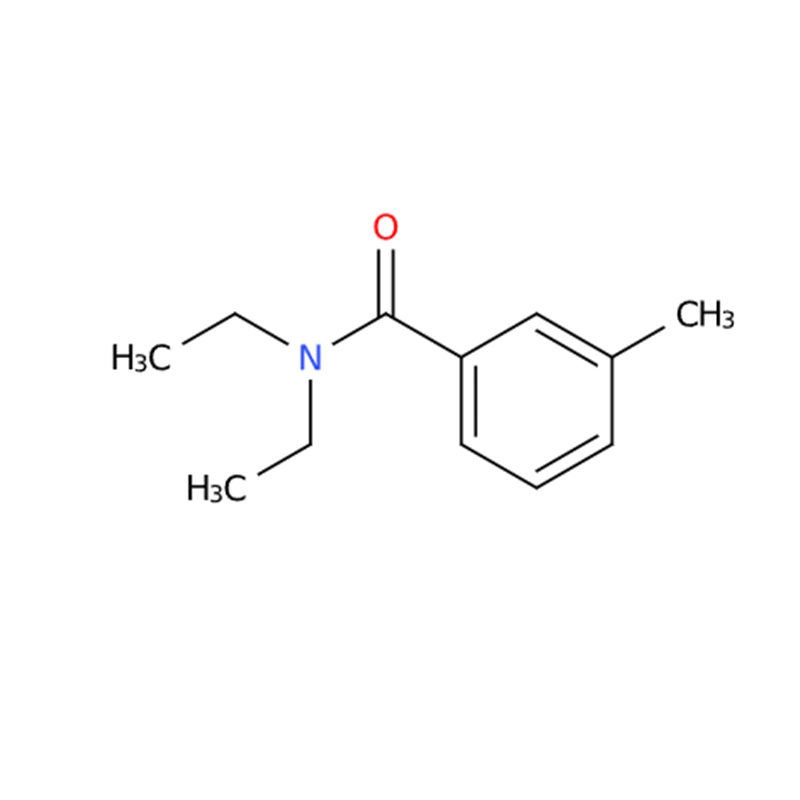
Product Description of N,N-Diethyl-m-toluamide CAS#134-62-3
Commonly referred to as DEET, N,N-Diethyl-m-toluamide is a wide-spectrum insect repellent capable of deterring numerous biting and pest insects across diverse scenarios. Its effective target spectrum covers mosquitoes, ticks, fleas, sand flies, horse flies, black flies, deer flies, gnats, midges, chiggers, stable flies and various other tiny flying pests.
DEET was originally invented and patented by the United States Department of Agriculture during World War II. It was officially deployed as a military mosquito repellent in 1946 and obtained civilian registration from the U.S. Environmental Protection Agency in 1957. Though initially developed for agricultural insecticidal applications, it was later massively utilized in military missions, especially in Vietnam and other Southeast Asian areas.
EPA data shows that nearly 40% of American residents use DEET-based repellent products every year, with the global user base reaching around 200 million. Decades of verification from numerous research institutions have solidly proven its reliable broad-spectrum repellent performance. The World Health Organization also endorses DEET-containing formulations to lower the risk of contact with disease-vector insects.
This ingredient is frequently compounded with other insecticidal components. Nevertheless, blending DEET with carbamate-type pesticides may lead to elevated toxic risks.
N,N-Diethyl-m-toluamide Chemical Properties
| Melting point | -45 °C |
| Boiling point | 111 °C1 mm Hg |
| density | 0.998 g/mL at 20 °C(lit.) |
| vapor density | 6.7 (vs air) |
| vapor pressure | <0.01 mm Hg ( 25 °C) |
| refractive index | n20/D 1.523(lit.) |
| Fp | >230 °F |
| storage temp. | room temp |
| solubility | DMSO (Slightly), Ethyl Acetate (Slightly), Methanol (Slightly) |
| pka | -1.37±0.70(Predicted) |
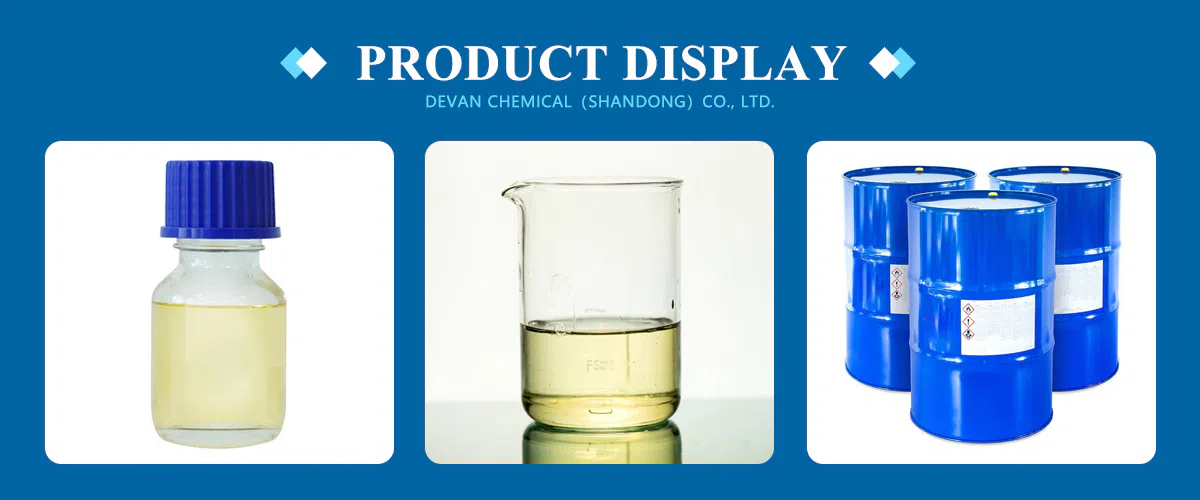
| form | Oily liquid |
| color | Colorless to pale-yellow |
| Specific Gravity | 0.996 |
| Odor | mild bland odor |
| Water Solubility | NEGLIGIBLE |
| Merck | 142856 |
| BRN | 2046711 |
| Stability: | Stable. Combustible. Incompatible with strong oxidizing agents, strong acids, strong bases. Hydrolyzes slowly in water. |
| InChIKey | CXVBTGKUSLNJQZ-UHFFFAOYSA-N |
| CAS DataBase Reference | 134-62-3(CAS DataBase Reference) |
| NIST Chemistry Reference | Diethyltoluamide(134-62-3) |
| EPA Substance Registry System | N,N-Diethyl-m-toluamide (134-62-3) |
| Hazard Codes | Xn |
| Risk Statements | 22-36/38-52/53 |
| Safety Statements | 61 |
| RIDADR | 2810 |
| WGK Germany | 2 |
| RTECS | XS3675000 |
| TSCA | Yes |
| HazardClass | 6.1(b) |
| PackingGroup | III |
| HS Code | 29242995 |
| Hazardous Substances Data | 134-62-3(Hazardous Substances Data) |
| Toxicity | LD50 orally in male rats (ml/kg): 2.43; in female rats: 1.78; dermally in rabbits: 3.18; LC50 by inhalation in rats (mg/l): 5.95 (U.S. EPA) |

Product Application of N,N-Diethyl-m-toluamide (DEET) CAS#134-62-3
As a highly potent insect repellent, DEET acts as the core active component in numerous solid and liquid mosquito repellent preparations. It delivers superior mosquito-resistant effects and is extensively adopted for daily and industrial mosquito prevention and management scenarios.
All three isomeric forms of DEET possess mosquito repelling properties, among which the meta-isomer boasts the optimal repellent efficacy. In commercial markets, the product is mainly supplied in liquid concentrated formulations with mainstream specifications of 70% and 95% purity.