
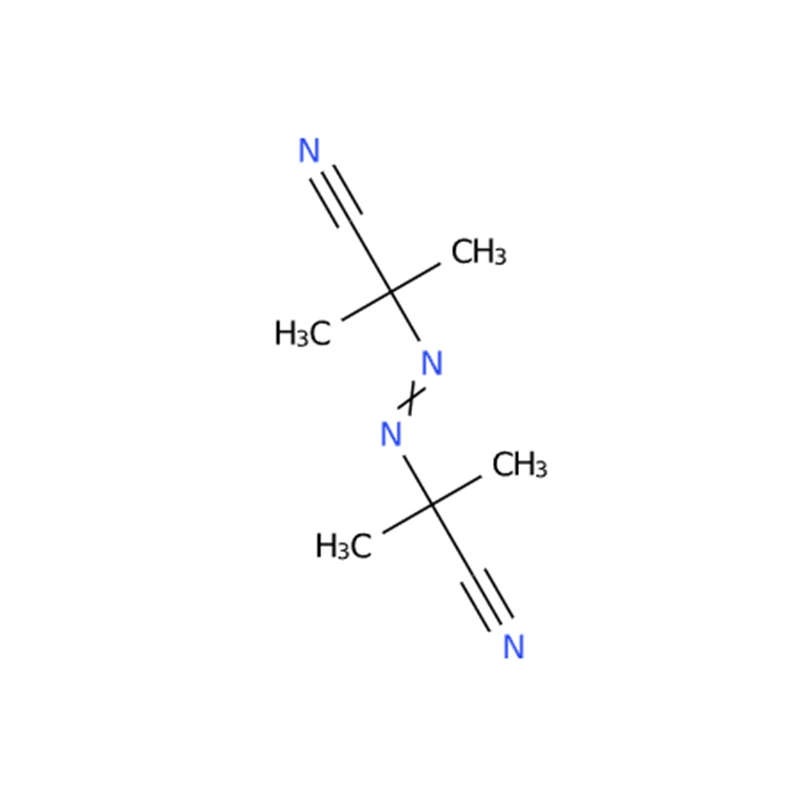
Product Description of Azobisisobutyronitrile CAS#78-67-1
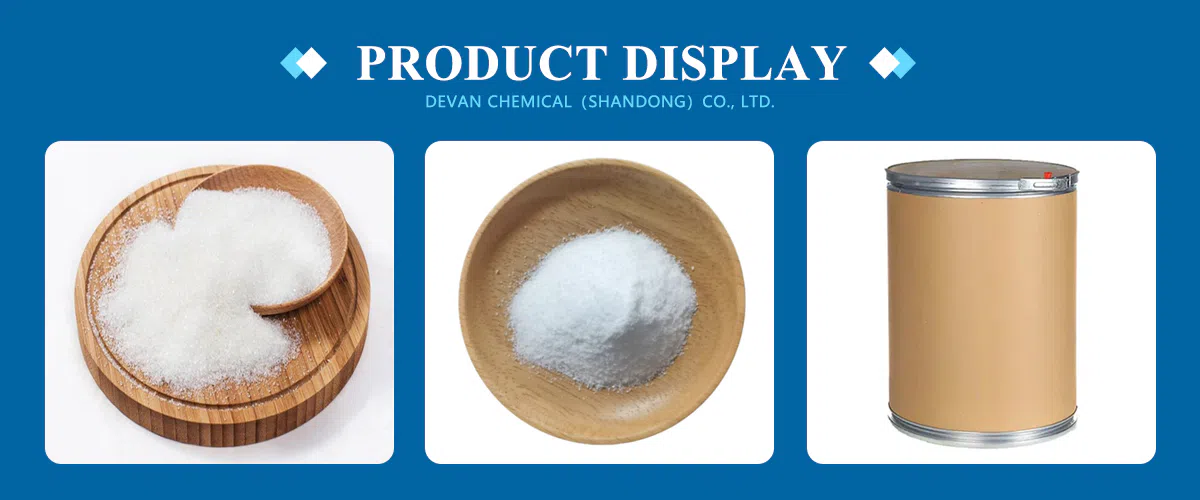
Azobisisobutyronitrile CAS#78-67-1, commonly known as AIBN, is a white columnar crystals or powder with a molecular formula of C₈H₁₂N₄ and a molecular weight of 164.21. It is an azo‑type compound that is thermally sensitive and decomposes upon heating, releasing nitrogen gas and generating free radicals.
Because of its self‑reactive nature, it must be stored in a cool, dark and well‑ventilated place, preferably under refrigeration, and kept away from heat, sparks, friction and strong oxidizing agents.
Azobisisobutyronitrile Chemical Properties
| Melting point | 102-104 °C (dec.)(lit.) |
| Boiling point | 281.68°C (rough estimate) |
| density | 1.11 |
| vapor pressure | 0.81Pa at 24.85℃ |
| refractive index | n20/D1.495 |
| Fp | 4℃ |
| storage temp. | 2-8°C |
| solubility | Chloroform (Slightly), Methanol (Slightly) |
| form | Solid |
| color | Crystals from EtOH |
| Odor | odorless |
| Water Solubility | Insoluble |
| Merck | 13920 |
| BRN | 1708400 |
| Stability: | Stability Flammable solid. Shock sensitive. Thermally unstable. May be explosive in combination with acetone or heptane. Incompatible with oxidizing agents. |
| InChIKey | OZAIFHULBGXAKX-VAWYXSNFSA-N |
| LogP | 1.1 at 25℃ |
| CAS DataBase Reference | 78-67-1(CAS DataBase Reference) |
| NIST Chemistry Reference | 2,2'-Azo-bis-isobutyronitrile(78-67-1) |
| EPA Substance Registry System | Azobis(isobutyronitrile) (78-67-1) |
| Hazard Codes | E,Xn,F,Xi |
| Risk Statements | 2-11-20/22-52/53-67-65-48/20-38-63-66-36 |
| Safety Statements | 39-41-47-61-62-36/37-16-26 |
| RIDADR | UN 3234 4.1 |
| WGK Germany | 2 |
| RTECS | UG0800000 |
| F | 4.4 |
| HazardClass | 4.1 |
| PackingGroup | II |
| HS Code | 29269090 |
| Hazardous Substances Data | 78-67-1(Hazardous Substances Data) |
| Toxicity | LDLo orl-rat: 670 mg/kg 34ZIAG 0,117,69 |

Product Application of Azobisisobutyronitrile CAS#78-67-1
The substance frequently serves as a polymerization trigger for raw-material monomers covering vinyl chloride, vinyl acetate and acrylonitrile. When manufactured into rubber and plastic goods, it functions as a foaming additive with the recommended addition proportion kept between 10 percent and 20 percent.
Apart from the above-mentioned purposes, it may act as a rubber cross-linking reagent, alongside being a synthetic precursor for agro-chemicals and organic-chemistry work.
Great caution is needed for its manipulation owing to its acute toxicity. Its oral-administration LD50 value for mice falls within 17.2-25 mg/kg. Hazardous cyanide-containing organic substances will be generated after thermal breakdown, which poses serious health threats to human bodies.