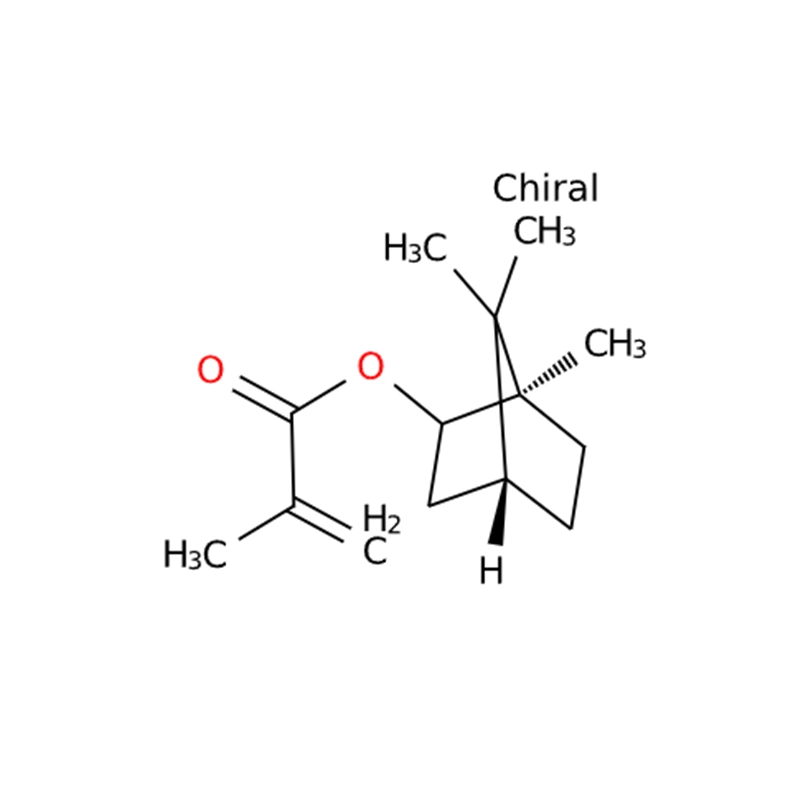
Product Description of Isobornyl Methacrylate CAS#7534-94-3
Isobornyl methacrylate, commonly shortened as IBOMA, belongs to transparent colour-free liquid-type monomers and strikes a favourable compromise between material rigidity and bending resilience. Benefiting from its distinctive molecular framework, polymerised products made from this monomer deliver superior surface gloss, bright colour presentation, scratch-proof capacity, chemical tolerance and outdoor ageing resistance. Besides, the compound possesses far weaker moisture-absorbing performance when compared with methyl methacrylate (MMA).
Resins synthesised from isobornyl methacrylate also show great miscibility with polyester, alkyd and numerous volatile film-forming substances for paints. Such favourable compatibility qualifies the raw material for manufacturing many high-end industrial coating supplies.
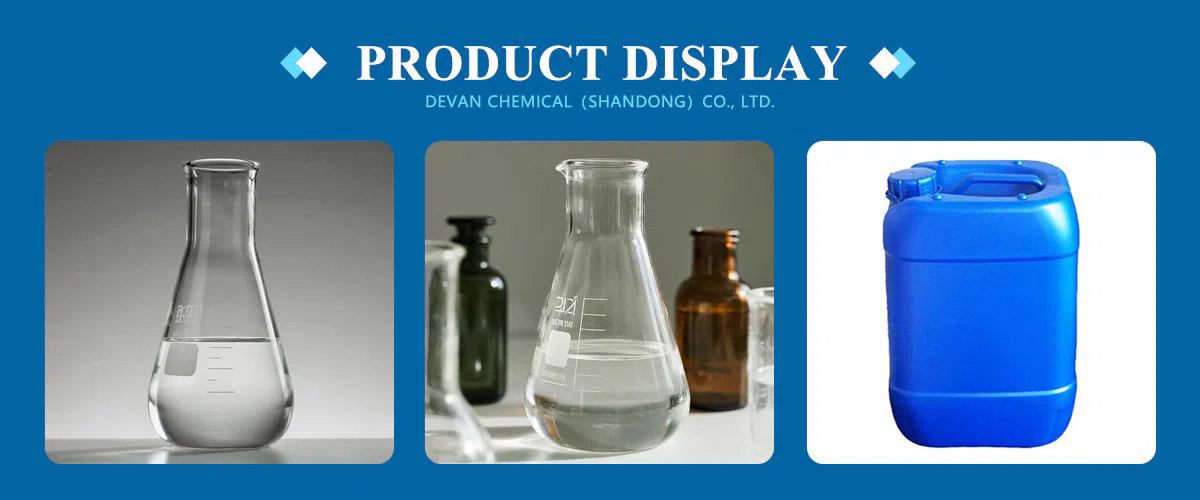
Isobornyl methacrylate Chemical Properties
| Melting point | -60 °C |
| Boiling point | 127-129 °C15 mm Hg(lit.) |
| density | 0.983 g/mL at 25 °C(lit.) |
| vapor pressure | 7.5Pa at 20℃ |
| refractive index | n20/D 1.477(lit.) |
| Fp | 225 °F |
| storage temp. | Keep in dark place,Sealed in dry,Room Temperature |
| form | Liquid |
| Specific Gravity | 0.985 |
| color | Clear colorless to yellow |
| Water Solubility | negligible |
| InChIKey | HHHKSPVBHWRWNA-QOZQQMKHSA-N |
| LogP | 5.09 |
| CAS DataBase Reference | 7534-94-3(CAS DataBase Reference) |
| EPA Substance Registry System | Isobornyl methacrylate (7534-94-3) |
| Hazard Codes | Xi |
| Risk Statements | 36/37/38 |
| Safety Statements | 26-36 |
| WGK Germany | 2 |
| HS Code | 29161400 |
| Hazardous Substances Data | 7534-94-3(Hazardous Substances Data) |
Product Application of Isobornyl Methacrylate CAS#7534-94-3
Boasting remarkable polymerization activity, isobornyl methacrylate serves as a valuable monomer for diverse industrial-grade manufacture. This raw material helps fabricate heat-resistant organic panels, optical fibre components, bonding agents, screen-printing ink bases, altered powder coatings, eco-friendly surface finishes and high-solids low-viscosity paint systems.
It may work as both an active thinner and resin toughening monomer and optimise pigment spreading inside resin matrices. When incorporated into acrylic resin recipes at 5-10 % loading, this cyclic monomer excels at cutting the viscosity of polymer solutions.
High-glass-transition-temperature thermoplastic acrylic resin can be prepared from IBOMA. The finished material combines rigidity, ethanol tolerance and thermal stability together with satisfying pliability, adhesive force, damp-proof property and outdoor endurance. It fits surface finishing for PET, PE, PP flexible plastic films and decorative protective coatings for PC and other engineering plastics.