
Products Description of Polyphenyl Polymethylene Isocyanate CAS#9016-87-9
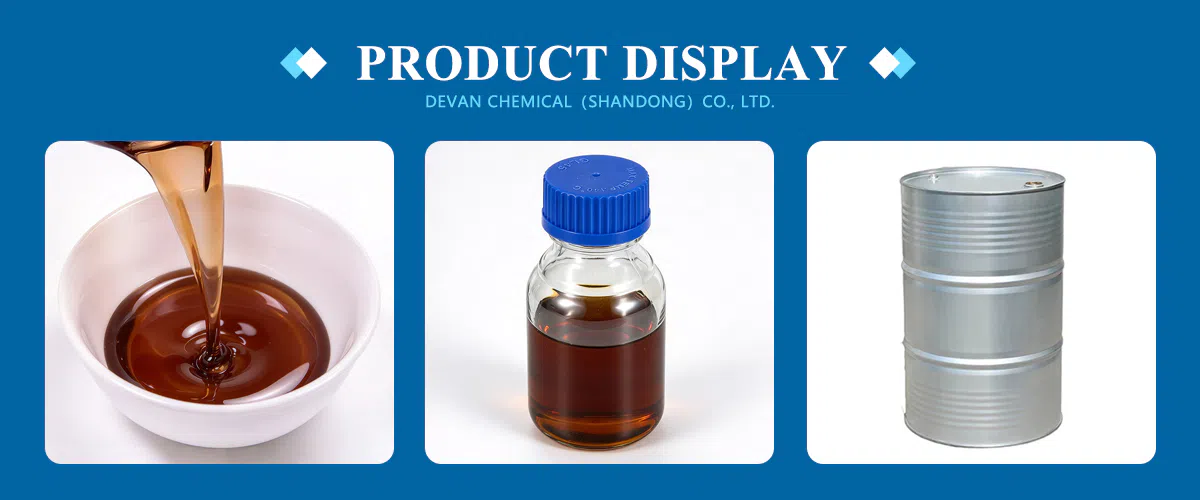
Polyphenyl polymethylene isocyanate (PAPI), commonly referred to as crude MDI, is a pale yellow to brown viscous liquid with a distinctive pungent odour. Its relative density is 1.2 g/mL(25 °C) , flash point reaches 218°C, and its freezing point is lower than 10°C. The viscosity measures 200–1000 mPa·s at 25°C.
PAPI is a blend containing roughly 50% MDI and 50% polyisocyanates with functionality higher than 2. It tends to self-polymerize under elevated temperatures. This product dissolves easily in organic solvents including chlorobenzene, o-dichlorobenzene and toluene.
Polymethylene Polyphenyl Polyisocyanate Chemical Properties
| Boiling point | >300 ℃ (1013 hPa), decomposes prior to boiling |
| density | 1.2 g/mL at 25 °C(lit.) |
| vapor density | 8.6 (vs air) |
| refractive index | n20/D 1.634 |
| Fp | >230 °F |
| storage temp. | Refrigerator, Under inert atmosphere |
| solubility | DMSO (Sparingly), Ethyl Acetate (Slightly), Methanol (Soluble) |
| form | Viscous liquid |
| color | Pale yellow to brown |
| Stability: | Stable. Incompatible with strong oxidizing agents, alcohols. May decompose in moist air, or on contact with water. |
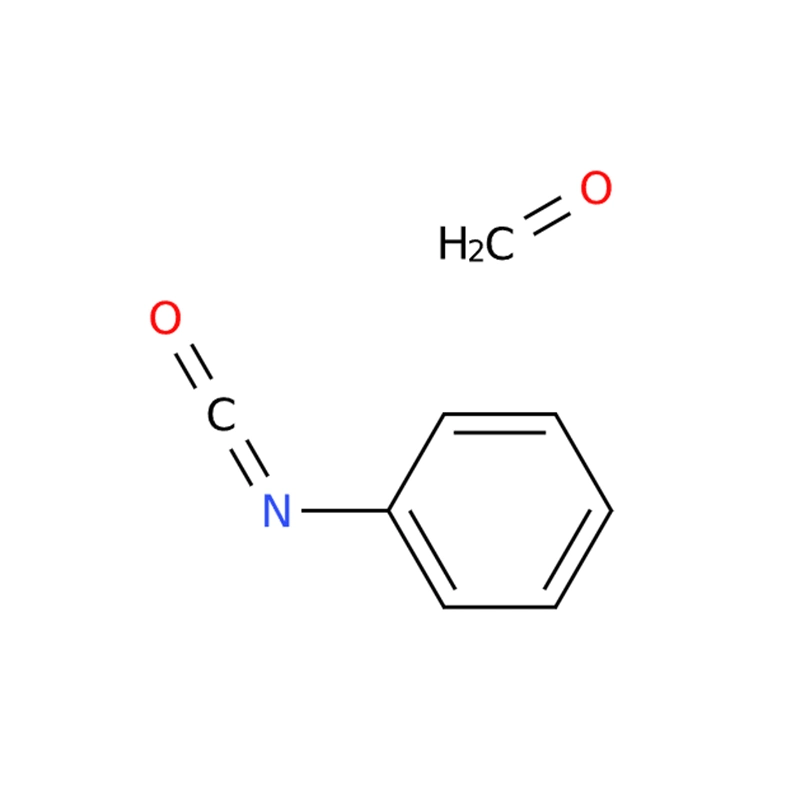
| InChI | InChI=1S/C7H5NO.CH2O/c9-6-8-7-4-2-1-3-5-7;1-2/h1-5H;1H2 |
| InChIKey | JTEOXXUIKUHXLD-UHFFFAOYSA-N |
| SMILES | O=C=NC1C([H])=C([H])C([H])=C([H])C=1[H].O=C([H])[H] |
| IARC | 3 (Vol. 19, Sup 7) 1987 |
| EPA Substance Registry System | Polymeric diphenylmethane diisocyanate (9016-87-9) |
| Hazard Codes | Xn,T+,T,F |
| Risk Statements | 20-36/37/38-42-42/43-26-22-39/23/24/25-23/24/25-11-20/21/22 |
| Safety Statements | 26-28-38-45-36/37-23-16-7-36 |
| WGK Germany | 3 |
| RTECS | TR0350000 |
| Hazardous Substances Data | 9016-87-9(Hazardous Substances Data) |

Product Application of Polymethylene Polyphenyl Polyisocyanate CAS#9016-87-9
Polymethylene polyphenyl polyisocyanate is a core curing component for polyurethane systems. It reacts readily with polyols to form rigid PU foams, widely used in thermal insulation for refrigeration equipment, cold storage panels, building spray insulation and PIR fire-retardant foam.
It also serves as a key raw material for wood-bonding adhesives for engineered wood and particle boards. Besides foam and adhesive sectors, it is applied in structural foam, casting elastomers and high-performance sealants. Its adjustable functionality enables formulation customization for different hardness, strength and flame resistance requirements. It is extensively adopted in construction, home appliance, furniture and composite manufacturing industries.