
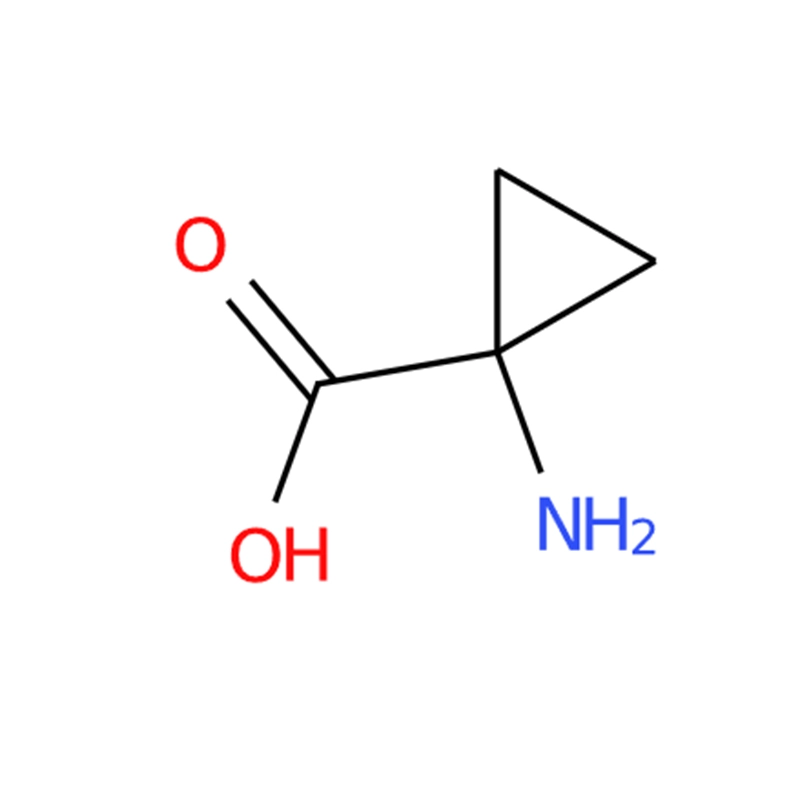
Products Description of 1-Aminocyclopropanecarboxylic Acid CAS#22059-21-8
Shortened to ACC, 1-aminocyclopropanecarboxylic acid falls under the category of cyclic non-protein amino acids. This natural compound can be detected in many fleshy fruits including apples and pears. Plant tissues generate the substance based on methionine resources. After its generation, a set of enzyme-driven chemical transformations turn ACC into plant ethylene.
More specifically, relevant catalytic enzymes convert S-adenosylmethionine (SAM) into this cyclic amino-acid monomer. It acts as the vital biosynthetic precursor and takes part in ethylene production which governs multiple plant physiological activities.
1-Aminocyclopropanecarboxylic Acid Chemical Properties
| Melting point | 229-231 °C (lit.) |
| Boiling point | 189.47°C (rough estimate) |
| density | 1.2245 (rough estimate) |
| refractive index | 1.4340 (estimate) |
| storage temp. | Keep in dark place,Sealed in dry,Room Temperature |
| solubility | DMSO (Slightly), Water (Slightly) |
| pka | 2.29±0.20(Predicted) |
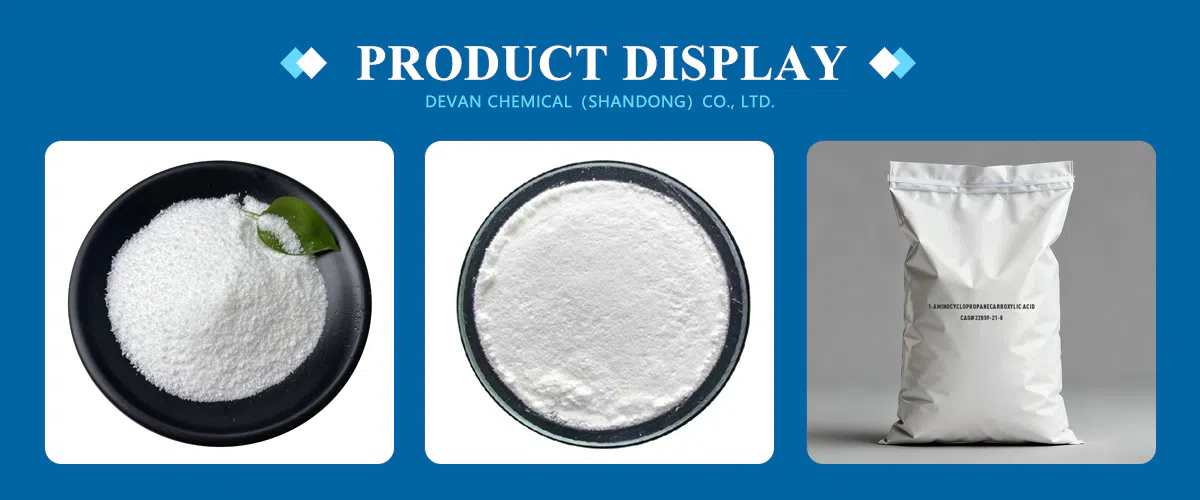
| form | Powder and Granules |
| color | White to off-white |
| Water Solubility | Soluble in water. |
| BRN | 2076413 |
| Stability: | Store in freezer at -20°C |
| InChI | InChI=1S/C4H7NO2/c5-4(1-2-4)3(6)7/h1-2,5H2,(H,6,7) |
| InChIKey | PAJPWUMXBYXFCZ-UHFFFAOYSA-N |
| SMILES | C1(N)(C(O)=O)CC1 |
| CAS DataBase Reference | 22059-21-8(CAS DataBase Reference) |
| Hazard Codes | Xi |
| Risk Statements | 36/37/38 |
| Safety Statements | 26-36-37/39 |
| WGK Germany | 3 |
| RTECS | GZ1110000 |
| Hazard Note | Irritant |
| HS Code | 29213000 |

Product Application of 1-Aminocyclopropanecarboxylic Acid CAS#22059-21-8
Classified as one cyclic-structured amino acid, 1-aminocyclopropanecarboxylic acid (ACC) serves as a valuable synthetic intermediate for pharmaceutical manufacturing. It is especially suitable for preparing peptide-based medicines and multi-polypeptide drug substances.
Besides its usage within fine-chemical and medical synthesis, this compound sees broad deployment for farm-related operations and botanical laboratory exploration. It can function as the plant-growth adjusting agent to manipulate ethylene generation and regulate the ripening, ageing and other physiological behaviours of crops and fruit specimens.